


Manuals Kart
Hyster H170FT, H175FT36, F190FT (A299) 4-Wheel Pneumatic Tire Forklifts Pdf Repair Service Manual
Hyster H170FT, H175FT36, F190FT (A299) 4-Wheel Pneumatic Tire Forklifts Pdf Repair Service Manual
⭐⭐⭐⭐⭐ 50+ Reviews
Couldn't load pickup availability

Hyster H170FT, H175FT36, H190FT (A299) 4-Wheel Pneumatic Tire Forklifts PDF Repair Service Manual
When a load weighs between 17,000 and 19,000 lb and the ground beneath the machine is an industrial hardstand, a port apron, or a steel plant floor, the margin for mechanical error is narrow. The Hyster H170FT, H175FT36, and H190FT are built specifically for this environment — large-capacity 4-wheel pneumatic tire counterbalance forklifts designed to handle coil steel, structural sections, paper reels, heavy castings, and bulk containers where mid-range forklifts are simply undersized for the task.
The H175FT36 is a variant worth understanding on its own terms. The 36-inch load center designation means it is rated for loads whose center of gravity sits 36 inches from the carriage face rather than the standard 24 inches — critical when handling long, wide, or unevenly distributed loads that would exceed the rated capacity of a standard-center machine. Misunderstanding this rating in the field leads to structural overloading. This manual documents the H175FT36 alongside the H170FT and H190FT because all three share the A299 platform, but technicians servicing the H175FT36 should understand the capacity distinction before carrying out any mast or hydraulic pressure work.
This Hyster A299 repair manual is the factory workshop document produced by Hyster Company for the full A299 series. It contains the original engineering procedures, measurement tolerances, pressure specifications, wiring references, and diagnostic sequences used to maintain and rebuild these machines. At this size class, having the correct factory data is not a shortcut — it is the only reliable basis for safe, effective repair work.
Manual Technical Specifications
| Manual Title | Hyster H170FT, H175FT36, H190FT 4-Wheel Pneumatic Tire Forklift Repair Service Manual |
| Series Code | A299 |
| Models Covered | H170FT (17,000 lb), H175FT36 (17,500 lb / 36-inch load center), H190FT (19,000 lb) |
| Equipment Type | 4-Wheel Pneumatic Tire Internal Combustion Counterbalance Forklift |
| Manual Type | Factory Workshop Repair and Maintenance Manual |
| Systems Covered | Engine, Powershift Transmission, Torque Converter, Drive Axle, Hydraulics, Mast, Electrical, Steering, Brakes, Split Rim Tyres |
| File Format | Digital PDF (Searchable and Printable) |
| Language | English |
| Delivery Method | Instant Download After Purchase |
| Device Compatibility | PC, Mac, Laptop, Tablet, Smartphone |
| Publisher | Hyster Company (Factory Workshop Documentation) |
Powershift Transmission and Torque Converter — Rebuild and Diagnosis
The transmission on a 19,000 lb forklift does not fail the same way a warehouse machine fails. When a powershift unit in this class begins slipping or losing a gear range, the machine is typically mid-cycle with a heavy load, often on an outdoor surface, and the consequences of further operation in a degraded state are serious. This section gives technicians a structured way into the fault — starting with a stall test and hydraulic circuit pressure checks to determine whether the problem lies in the converter, the clutch packs, or the control circuit — before any major disassembly is committed to.
- Torque converter stall test: Full procedure including engine rpm specification at stall, interpretation criteria, and what stall speed deviation indicates about converter condition
- Clutch circuit pressure testing: Pressure specification for each gear range clutch circuit, test point locations, and acceptable pressure drop limits under load
- Clutch pack inspection: Disc and separator plate thickness tolerances, pack clearance measurement method, and friction material wear assessment criteria specific to high-cycle heavy applications
- Transmission removal and disassembly: Machine preparation, converter housing separation sequence, and sub-assembly identification for this capacity class
- Modulation and control valves: Valve body removal, spool cleaning, spring free-length check, and reassembly torque data
- Fluid specification and change procedure: Approved fluid grade for heavy-duty powershift applications, fill capacity, sump drain and refill sequence, and filter replacement interval
Large-Displacement Engine Service and Fuel System Calibration
The engine fitted to the A299 series operates under sustained high-load demand — particularly in steel and port environments where the machine may run continuously across multiple shifts. Heat cycles, oil consumption patterns, and fuel system wear present differently on an engine running at near-capacity versus one doing light intermittent work. This section addresses overhaul and calibration procedures for each fuel variant, including the specific measurement criteria that determine whether components can be returned to service or need replacement under these operating conditions.
- Cylinder head and block: Bore diameter and taper measurement, head gasket surface flatness check, valve seat recession measurement, and head bolt replacement criteria for engines with high thermal cycling history
- Valve train: Valve clearance specification per engine variant, cam lobe wear measurement, and rocker arm condition assessment
- LPG system: Primary and secondary regulator pressure settings, vaporizer water temperature requirement, and mixer air-fuel calibration procedure for high-output engine configurations
- Diesel injection system: Static and dynamic pump timing procedure, nozzle opening pressure test, injector return rate comparison across cylinders, and complete bleed sequence
- Engine cooling under sustained load: Coolant pressure cap rating, thermostat opening and full-open temperature, water pump impeller clearance, and radiator core restriction assessment for machines in high-ambient environments
- Oil system: Pump output pressure test, pressure relief valve setting, oil cooler bypass valve condition, and oil consumption diagnostic approach for high-hour engines
Drive Axle, Differential, and Wheel Hub Assembly
The drive axle on the H170FT, H175FT36, and H190FT carries load forces that require precise bearing preload settings and gear mesh geometry to maintain reliability over a working life measured in heavy shifts rather than light duty cycles. A differential rebuilt with incorrect backlash or insufficient bearing preload on a machine in this class will present with noise and heat long before catastrophic failure — but on an industrial site, that early warning is often missed until the damage is already done. This section provides the measurement procedures and tolerance data to get the rebuild right the first time.
- Axle shaft service: Shaft removal without disturbing hub bearing preload, shaft spline wear assessment, and flange seal replacement procedure
- Ring and pinion setup: Backlash measurement specification, pinion depth adjustment method, bearing preload setting procedure, and tooth contact pattern interpretation
- Carrier bearing preload: Shim selection method, bearing crush specification, and preload verification after assembly
- Axle housing inspection: Crack detection procedure around axle tube welds and housing mounting faces — a known stress point on machines regularly handling near-rated loads
- Hub and bearing assembly: Bearing cup and cone replacement, hub end-float adjustment specification, and hub seal installation procedure for split rim tyre fitment
- Breather and seal maintenance: Differential breather cleaning interval, inner axle seal replacement method, and sealant specification for housing joint faces
Hydraulic Circuit and Mast Assembly — High Load Capacity Service
Lift cylinder integrity and mast channel condition carry more consequence on a near-20,000 lb machine than on lighter equipment. A cylinder seal that weeps under light load may hold under moderate pressure but fail to maintain position under a full-rated load — a distinction that matters significantly when the load in question weighs as much as these machines are rated for. This section addresses the hydraulic circuit and mast assembly with the inspection criteria and test procedures appropriate for this capacity class.
- Lift cylinder condition assessment: Internal bore surface inspection criteria, acceptable honing limits before cylinder replacement is required, and seal kit specification for high-pressure applications
- Load-hold valve inspection: Valve seat condition check, leak-down test procedure under rated load pressure, and seat lapping criteria before replacement
- Main relief valve calibration: Pressure setting procedure, gauge connection point, and acceptable tolerance range for this capacity class — tighter than on lighter machines
- Mast channel and roller wear: Channel face wear measurement points, roller clearance adjustment sequence, and maximum allowable play before mast stability is affected
- Lift chain service: Chain elongation measurement method, pin and link wear criteria, anchor pin torque specification, and lubrication type and interval for heavy-cycle applications
- Carriage and fork inspection: Fork blade thickness measurement at heel, fork straightness tolerance, carriage bar wear, and side play limits under loaded conditions
Electrical Circuits and Fault Tracing
The electrical system on the A299 series is straightforward compared to modern telematics-equipped machines — which is actually an advantage for field technicians who need to diagnose and resolve faults without proprietary software. The circuit diagrams in this section are organized by function, meaning a technician can start with the symptom — a warning light, a solenoid that will not actuate, an instrument that reads incorrectly — and follow the relevant circuit through to the component causing the fault using a multimeter and the reference data in this manual.
- Starting and charging circuit: Starter motor current draw test, alternator regulated output voltage specification, and battery sulphation assessment for machines used in cold or high-temperature environments
- Hydraulic solenoid circuits: Solenoid coil resistance test values, valve actuation voltage specification, and wiring connector condition assessment at the solenoid body
- Operator safety interlock: Seat switch contact resistance, directional lever interlock sequence, and parking brake circuit continuity test — each documented as an individual test rather than a system reset procedure
- Engine management sensors: Coolant temperature sensor resistance curve, oil pressure switch activation threshold, and transmission fluid temperature sender test values
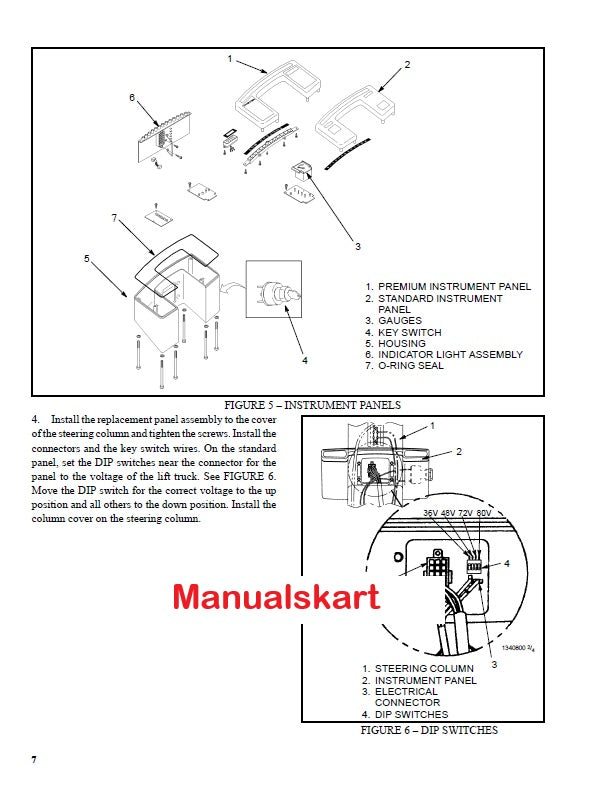
- Instrument and warning system: Individual gauge circuit test procedure, warning lamp circuit resistance check, and hour meter drive signal verification
Steering Axle, Service Brakes, and Split Rim Tyre Procedures
Split rim tyre handling is one of the highest-risk maintenance tasks on large pneumatic tire forklifts and one of the most frequently done incorrectly in field conditions. This section covers the safe deflation, disassembly, and reassembly procedure for the split rim assemblies fitted to the A299 series — alongside the steering and brake service procedures for machines operating at this weight and load class. The brake adjustment criteria here are specific to the stopping force requirements of a loaded H190FT, not generic figures carried over from a lighter machine.
- Split rim safety procedure: Mandatory deflation verification before rim separation, component inspection sequence, and reassembly torque specification in the correct tightening pattern
- Tyre inflation specification: Load-rated inflation pressure for each model variant, pressure check frequency for high-cycle outdoor applications, and sidewall damage rejection criteria
- Steering axle king pin: Bore diameter wear limit, king pin replacement procedure, thrust bearing condition, and toe-in specification after reassembly
- Steering cylinder: Rod seal replacement procedure, cylinder mounting torque, and steering response test after reassembly
- Service brake adjustment: Drum diameter maximum wear limit specific to this load class, shoe lining thickness minimum before replacement is required, and brake balance check procedure across axle
- Parking brake holding test: Rated gradient test specification for machines in this weight class, cable tension adjustment, and actuator linkage condition assessment
Maintenance Intervals and Scheduled Service Guide
Large-capacity forklifts running in steel plants, ports, or paper mills typically accumulate hours faster than warehouse equipment and in conditions that accelerate wear on specific components — particularly cooling systems, brake linings, transmission fluid, and tyres. This section of the manual sets out the factory-recommended service intervals for the A299 series, organized by hour meter reading, so maintenance teams can build a structured schedule rather than reacting to failures.
- Daily pre-shift checks: Fluid levels, tyre condition and pressure, brake function, steering response, mast chain lubrication, and safety interlock verification
- 250-hour service: Engine oil and filter, transmission fluid condition check, hydraulic fluid sample, air filter restriction indicator check, and grease points
- 500-hour service: Transmission fluid and filter change, fuel filter replacement, cooling system condition assessment, brake lining inspection, and drive axle oil check
- 1000-hour service: Full hydraulic fluid change, mast chain elongation measurement, differential oil change, engine valve clearance check, and steering axle pivot inspection
- 2000-hour service: Cooling system flush and refill, transmission internal inspection, engine compression test, and structural inspection of mast and chassis mounting points
Frequently Asked Questions
What is the H175FT36 and why does the 36-inch load center matter?
The H175FT36 is rated at 17,500 lb at a 36-inch load center, meaning its capacity rating assumes the load's center of gravity is 36 inches from the face of the forks rather than the standard 24 inches. This matters when handling long structural steel sections, large reels, or wide palletized loads where the effective load center is further out. Operating a standard 24-inch rated machine with such loads can result in exceeding the actual safe capacity even if the gross weight appears within limit.
Does this manual cover all three A299 models or just one?
The manual covers the H170FT, H175FT36, and H190FT as a complete set. Where specifications differ between variants — such as load-rated brake adjustment values or hydraulic relief pressure settings — the manual documents each separately. Where systems are shared across the A299 platform, a single procedure covers all three.
What fuel system variants are covered?
LPG, petrol, and diesel configurations are all covered with separate procedures for each. This includes regulator and mixer calibration for LPG, carburettor rebuild and adjustment for petrol, and injection pump timing and nozzle testing for diesel variants — not generic engine manufacturer data but procedures specific to the Hyster installation.
Is the split rim tyre procedure included?
Yes. A dedicated procedure covers mandatory deflation verification before disassembly, rim component inspection, tyre fitting, reassembly sequence, and torque pattern — addressing the specific safety requirements that apply to large pneumatic split rim assemblies on machines in this size class.
Does this manual include transmission pressure test procedures?
Yes. Pressure test procedures are provided for each clutch circuit in the powershift transmission, including test point locations, specification values per gear range, and acceptable pressure drop criteria. These are used alongside the stall test to diagnose transmission faults before committing to a full rebuild.
Can I use this manual without dealer diagnostic software?
Yes. The manual is written for workshop technicians using standard tools. Electrical fault tracing uses multimeter test values. Hydraulic diagnosis uses pressure gauges. Transmission diagnosis uses the stall test and circuit pressure checks. None of the diagnostic procedures in this manual require proprietary software or dealer-level scan tools.
Download the Hyster H170FT H175FT36 H190FT A299 Service Manual PDF
Access the complete Hyster A299 factory repair manual immediately from Manualskart.com. For technicians and maintenance engineers working on large-capacity pneumatic tire forklifts in demanding industrial environments, this Hyster H170FT H175FT36 H190FT service manual PDF provides the measurement data, rebuild procedures, and diagnostic sequences that make the difference between a repair that holds under load and one that comes back — putting factory-standard documentation in the hands of the people who actually do the work.


Case construction equipment parts Case agriculture equipment manuals New holland agriculture parts New holland construction parts Volvo skid steer parts Cub cadet service manual pdf Kubota service manuals pdf Caterpillar wheel loader manual pdf Hyundai service manual pdf Cummins service manuals Mitsubishi diesel engine manual pdf Perkins engine service manual Yanmar Diesel engine service manual pdf Caterpillar equipment manuals Kubota tractor service manual Volvo service manual Bobcat Equipment Manual parts Pdf Komatsu excavator Downloadable caterpillar manuals US JCB Service manual download
